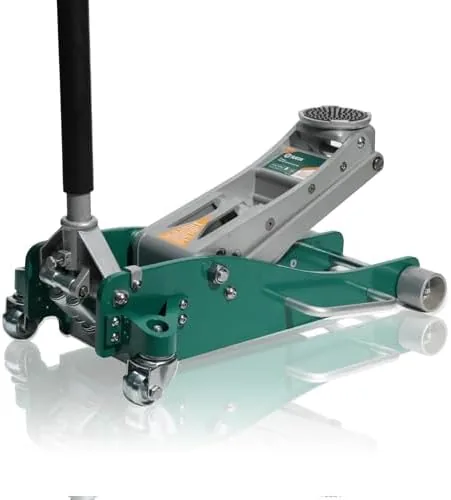
Pittsburgh Jack — Low Profile Jack
Pittsburgh Jack Low Profile Jack: Built for Home Mechanics Who Demand Professional Results
Since 1977, Pittsburgh Jack has served a singular purpose — delivering professional-grade automotive lifting equipment at prices that make sense for home mechanics and DIY enthusiasts. Founded by Eric and Allan Smidt in Calabasas, California, the brand emerged from a simple observation: weekend warriors and hobbyist mechanics deserve the same quality tools used in professional shops without the professional price tag. This mission has driven every design decision for nearly five decades.
The core audience for Pittsburgh Jack floor jacks includes home mechanics tackling routine maintenance, weekend car hobbyists building project vehicles, and professional technicians seeking reliable backup equipment. These are individuals who understand that cutting corners on lifting equipment means cutting corners on safety. They recognize the value proposition of ASME-PASE compliant equipment that performs reliably year after year, whether used monthly for oil changes or weekly for more intensive work.
What distinguishes Pittsburgh Jack from generic alternatives is the understanding that accessibility should never mean compromise. The brand's engineers design for real-world garage conditions, accounting for uneven concrete floors, limited maneuvering space, and the physical demands of repetitive use. Every jack reflects input from actual mechanics who use this equipment daily, resulting in thoughtful details that make difficult jobs easier and safer.
From Weekend Projects to Full Restorations: The Complete Lineup
The product range addresses every scenario a home mechanic encounters. Ultra-low profile floor jacks with minimum heights starting at 2¾ inches slide effortlessly beneath lowered sports cars, racing vehicles, and cars with aggressive aftermarket suspension setups. Standard profile models handle everyday sedans, SUVs, and light trucks with equal confidence. This breadth ensures owners of any vehicle type find a suitable lifting solution.
Capacity options span from compact 2-ton models ideal for lightweight sports cars to robust 3-ton units capable of handling full-size trucks and SUVs. The heavier-duty options feature reinforced frames and wider saddles for stable contact with larger lift points. Aluminum hybrid models reduce weight significantly without sacrificing strength, making them popular among traveling mechanics and those with limited storage who need portable options.
Beyond floor jacks, the ecosystem includes compatible accessories like extended-reach handles, replacement saddle pads, and wheel dollies designed to integrate seamlessly. This comprehensive approach means mechanics can build a complete garage setup from a single trusted source, ensuring compatibility and consistent quality across their lifting equipment.
The RAPID PUMP Dual-Piston Hydraulic Advantage
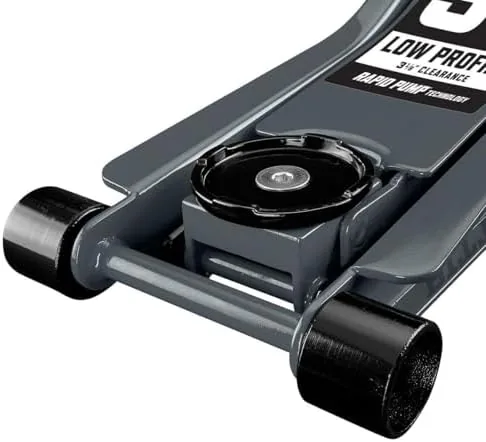
The engineering philosophy behind Pittsburgh Jack centers on the proprietary RAPID PUMP dual-piston hydraulic system. Unlike conventional single-piston designs requiring 10-15 pumps to reach full height, this technology achieves maximum lift in just 3½ pumps. The efficiency translates directly to reduced physical strain during long work sessions and faster vehicle positioning when time matters.
Dual pistons distribute hydraulic pressure more evenly throughout the lifting cycle, resulting in smoother operation and reduced component wear. The system maintains consistent lifting speed regardless of load weight, so a fully-loaded SUV rises as smoothly as an empty compact car. This predictable behavior builds user confidence and reduces the likelihood of sudden movements that could compromise safety.
The hydraulic system incorporates overload protection that prevents operation beyond rated capacity. Internal bypass valves release pressure before dangerous stress levels occur, protecting both the equipment and the user. This engineered safety margin exceeds ASME-PASE requirements and demonstrates the brand's commitment to responsible design over marketing specifications.
Pittsburgh Jack Low Profile Jack Features: What Matters Under the Hood
- RAPID PUMP Dual-Piston System Lifts vehicles to full height in 3½ pumps, reducing fatigue during extended work sessions and speeding up vehicle positioning.
- Ultra-Low 2¾-Inch Entry Height Slides beneath lowered sports cars, racing vehicles, and modified suspension setups that defeat standard floor jacks.
- Heavy-Duty Welded Steel Construction Full-frame welding eliminates weak points found in bolted assemblies, with tough finish coating resisting garage chemicals and moisture.
- ASME-PASE Safety Compliance Meets or exceeds industry safety standards for hydraulic jacks, verified through independent testing and certification.
- High-Quality Swivel Casters Ball-bearing mounted wheels rotate 360 degrees for precise positioning in tight spaces and smooth rolling on concrete surfaces.
- Wide Lifting Range Maximum heights exceeding 18 inches accommodate SUVs and trucks while minimum heights handle ground-hugging sports cars.
- Ergonomic Handle Design Two-piece handles provide leverage without requiring uncomfortable pumping angles, with knurled grips preventing slippage.
Garage Favorites: The Models Mechanics Reach For First
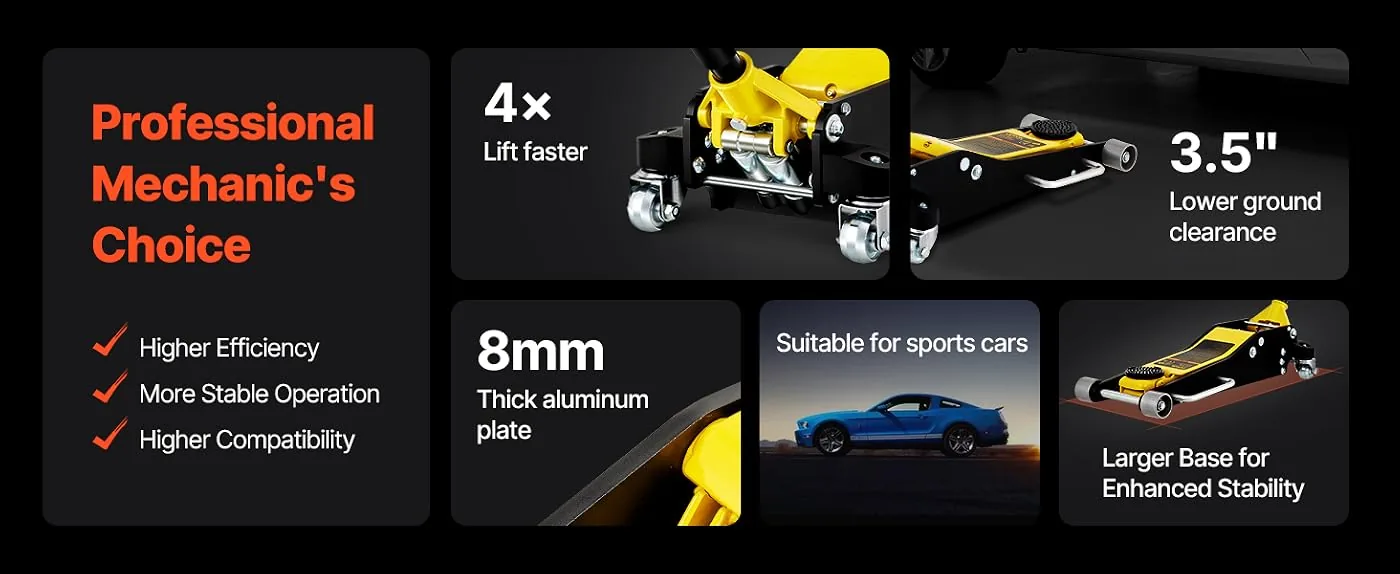
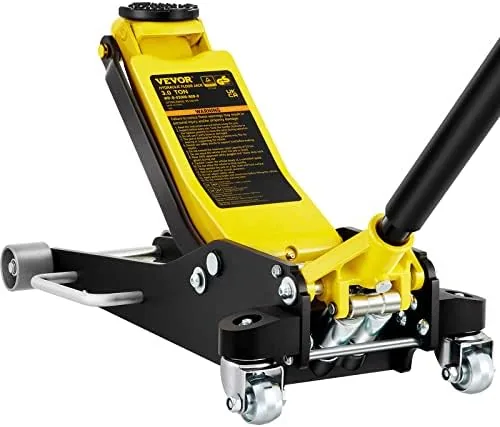
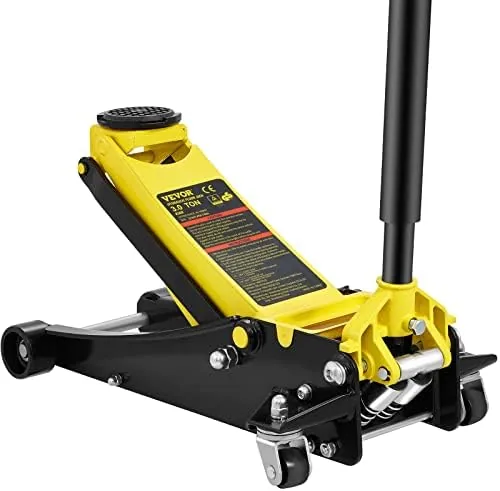
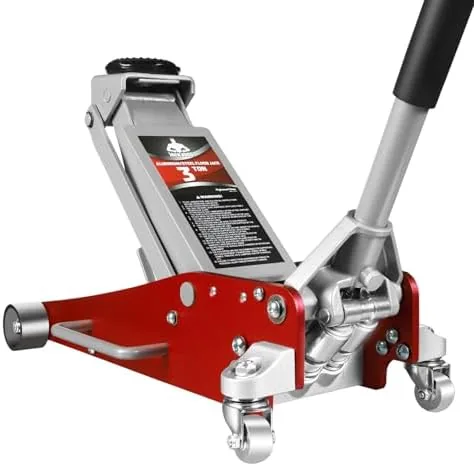
The VEVOR 3 Ton Low Profile Aluminum & Steel Racing Floor Jack represents the sweet spot between capability and portability. Its 6,600-pound capacity handles everything from Miatas to F-150s, while the aluminum-steel hybrid construction keeps weight manageable for one-person operation. The dual-piston pump achieves full lift rapidly, making it the go-to choice for tire rotations and seasonal tire changes.
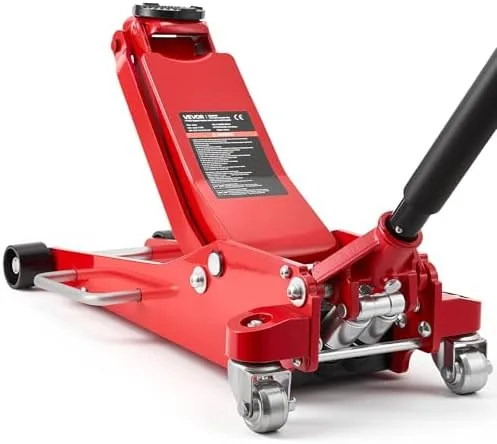
For dedicated sports car enthusiasts, the VEVOR Low Profile Floor Jack with its 3.3-inch minimum height accesses vehicles that leave other jacks stranded. The 20.3-inch maximum lift provides ample clearance for wheel work and suspension maintenance. Professional technicians appreciate the smooth lowering control that prevents sudden vehicle drops when releasing the pressure valve.
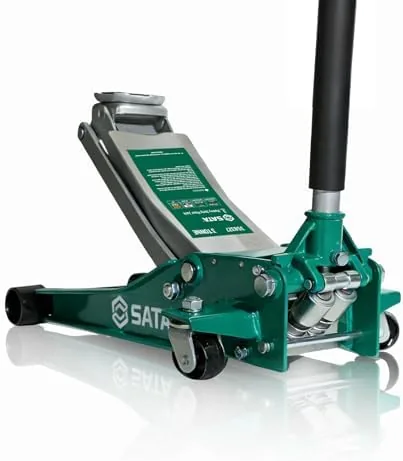
The SATA 3-Ton Heavy-Duty Steel Floor Jack earns loyalty through its 1.5x overload testing protocol. Every unit withstands 4.5 tons before leaving the factory, exceeding ANSI/ASME requirements and providing confidence during heavy-duty applications. Its 2-11/16-inch entry height serves lowered vehicles while the robust steel construction handles daily professional shop use.
Welded Steel Frames, Hardened Components, and Factory-Tested Hydraulics
Construction begins with heavy-gauge steel forming the main frame and lifting arm. Rather than relying on bolted assemblies that loosen over time, Pittsburgh Jack employs continuous welding at all stress points. This approach creates a unified structure that distributes lifting forces throughout the frame rather than concentrating them at fastener locations. The welds undergo visual inspection and stress testing before progressing to finishing.
The hydraulic cylinder uses precision-machined components with chrome-plated rams resistant to scoring and corrosion. Internal seals consist of oil-resistant compounds rated for temperature extremes encountered in unheated garages and hot summer conditions. The pump mechanism incorporates hardened steel pistons running in machined bores with tight tolerances that maintain efficiency throughout years of service.
Surface finishing involves multi-stage coating that resists common garage chemicals including brake cleaner, penetrating oils, and hydraulic fluid. The powder-coat exterior withstands impact and abrasion from dropped tools and concrete scraping. Caster wheels use sealed ball bearings that roll smoothly without collecting debris, while the rubber saddle pad grips lift points securely without marring painted or coated surfaces.
From First Pump to Full Lift: How These Jacks Perform in Real Garages
Positioning a Pittsburgh Jack beneath a vehicle reveals immediate advantages. The low-profile designs slide under factory ground clearances without requiring ramps or blocks to gain access. The extended reach of the lifting arm places the saddle directly under factory lift points without pushing the entire jack assembly beneath the vehicle. This geometry keeps casters accessible and simplifies extraction after lowering.
During the lift cycle, the RAPID PUMP system delivers noticeable efficiency gains. Where conventional jacks require sustained pumping effort, these units reach working height in seconds. The hydraulic action feels solid throughout the stroke without the spongy behavior indicating air contamination or worn seals. Load stability at height remains rock-solid, with no drift or settling observed during extended work periods.
Release behavior demonstrates controlled engineering. Turning the handle counterclockwise opens the release valve gradually, allowing precise lowering speed. There's no sudden drop when releasing pressure, even under maximum load. This controlled descent protects both the vehicle and the user, allowing last-moment repositioning of jack stands or adjustment of wheel placement before the suspension takes over.
Getting Maximum Performance From Your Pittsburgh Jack Low Profile Floor Jack
- Surface Selection Always operate on solid, level surfaces like concrete or asphalt. Gravel, grass, or inclined surfaces compromise stability and caster function.
- Lift Point Identification Consult vehicle owner's manual for designated lift points. Using incorrect locations risks frame damage or saddle slippage under load.
- Pre-Lift Inspection Check hydraulic fluid level through sight glass. Verify saddle pad security and caster rotation before positioning under vehicle.
- Proper Pumping Technique Use full handle strokes rather than rapid partial pumps. Complete strokes maximize fluid displacement and reduce cycle count.
- Jack Stand Integration Never work beneath vehicles supported only by hydraulic jacks. Position rated jack stands at secondary support points before beginning work.
- Controlled Lowering Turn release valve slowly. Rapid valve opening causes uncontrolled descent that stresses hydraulic seals and risks vehicle damage.
- Post-Use Storage Lower saddle completely before storage. Store handle detached in included clips to prevent bending during transport or stacking.
Weight Ratings, Reach Dimensions, and Vehicle Compatibility Guidelines
Capacity Considerations
- Never exceed stated weight rating regardless of vehicle lift point strength
- Account for uneven weight distribution on vehicles with heavy front-end components
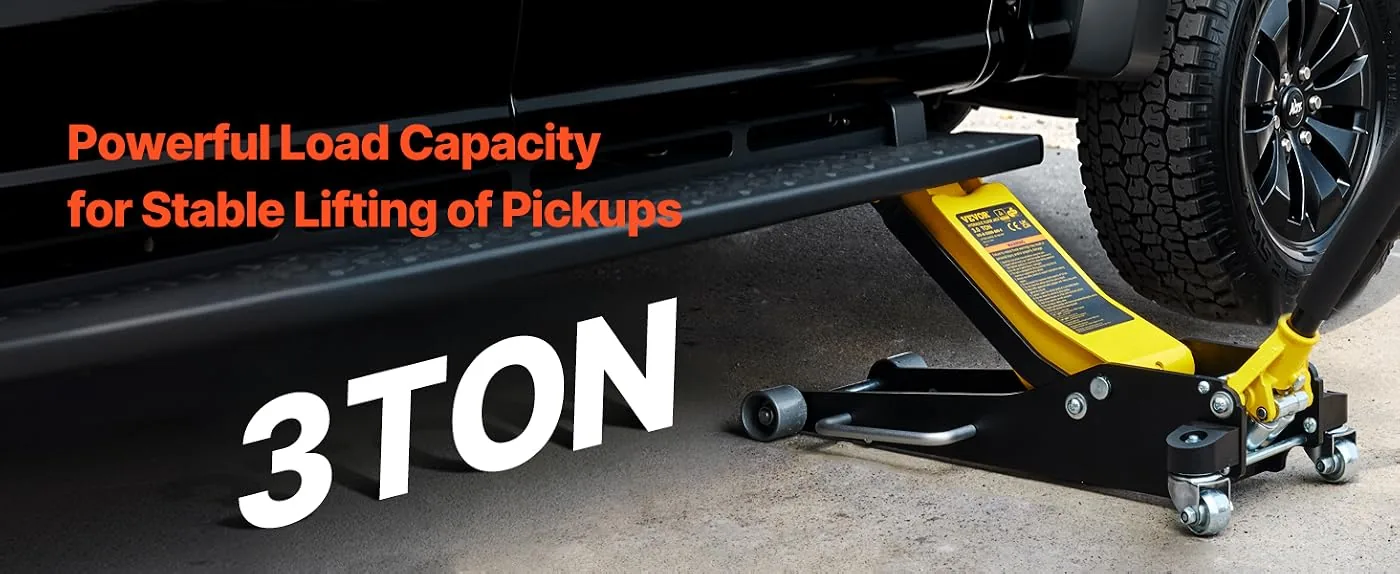
- 3-ton models provide safety margin for most passenger vehicles and light trucks
- Consider fluid loads when lifting vehicles with full fuel tanks or cargo
Clearance Requirements
- Measure actual ground clearance at lift point, not at bumpers or side skirts
- Aftermarket body kits often reduce clearance below factory specifications
- Loaded suspension compresses, reducing clearance from empty measurements
- Running boards and side steps may require offset positioning
The Perfect Tool for Project Car Builders and Routine Maintenance Warriors
Project car enthusiasts building modified vehicles find particular value in ultra-low profile capabilities. Lowered suspension setups that defeat standard floor jacks work seamlessly with entry heights under 3 inches. Racing hobbyists preparing track day vehicles appreciate rapid lifting that minimizes time between driving sessions and maintenance checks.
Routine maintenance practitioners benefit equally from quality lifting equipment. The homeowner performing quarterly oil changes no longer struggles with inadequate equipment or dangerous improvisation. Seasonal tire swaps become efficient operations rather than dreaded chores. Brake inspections and pad replacements proceed safely with stable, reliable vehicle support.
Professional technicians seeking shop redundancy or mobile service capability recognize the value proposition. These jacks deliver performance comparable to equipment costing significantly more while maintaining the safety certifications required in professional environments. The durability ensures years of service without the frequent repairs that plague budget alternatives.
Selecting the Right Low Profile Jack: Capacity, Height, and Application Matching
Capacity selection begins with identifying the heaviest vehicle requiring service. Check gross vehicle weight ratings in owner's documentation rather than estimating from vehicle size. Add a safety margin of at least 20% to account for uneven weight distribution during single-point lifting. A 3-ton jack handles most passenger vehicles and light trucks comfortably.
Minimum height requirements depend on actual ground clearance at lift points. Factory suspension vehicles typically provide adequate clearance for standard floor jacks, but anyone with lowered vehicles should measure carefully. The 2¾-inch entry height of ultra-low profile models accommodates aggressive drops that defeat conventional equipment. Maximum lift height matters for wheel removal and suspension work on taller vehicles.
Usage frequency influences material selection. Aluminum-hybrid models reduce weight for occasional users who prioritize portability and storage convenience. All-steel construction suits heavy-use environments where maximum durability outweighs weight concerns. Handle length affects pumping effort and storage requirements, so users with limited space may prefer two-piece designs that separate for compact storage.
Pittsburgh Jack Low Profile Jack vs. Leading Competitors: Feature Comparison
| Feature | Pittsburgh Jack | Generic Big Box | Premium Import |
|---|---|---|---|
| Maximum Capacity | 3 tons (6,600 lbs) | 2.5 tons (5,000 lbs) | 3 tons (6,600 lbs) |
| Minimum Height | 2¾ inches | 4+ inches | 3 inches |
| Pump Technology | RAPID PUMP dual-piston | Single piston | Dual piston |
| Pumps to Full Height | 3½ pumps | 10-15 pumps | 5-6 pumps |
| Safety Certification | ASME-PASE compliant | None stated | CE marked |
| Overload Testing | Factory tested | Not specified | Batch sampled |
| Frame Construction | Full-weld steel | Bolted assembly | Welded steel |
| Caster Type | Ball-bearing swivel | Plastic fixed | Steel swivel |
| Warranty Coverage | 1-2 years | 90 days | 1 year |
Specifications based on manufacturer-published data. Individual models vary within each brand lineup.
Maintaining Hydraulic Performance and Extending Service Life
- Hydraulic Fluid Level Check monthly via sight glass or fill plug. Top off with manufacturer-specified fluid only. Never mix fluid types.
- Seal Inspection Watch for fluid weeping around cylinder and pump base. Early detection prevents sudden failure under load.
- Caster Maintenance Clear debris from wheels and bearings regularly. Apply light machine oil to swivel pivots annually.
- Frame Cleaning Remove road grime and chemical residue with degreaser. Dry completely to prevent corrosion beneath protective coating.
- Release Valve Care Operate valve through full range monthly even when not in use. This prevents internal corrosion and maintains smooth operation.
- Storage Conditions Store in dry location away from moisture sources. Fully lowered position prevents seal compression damage during long-term storage.
- Annual Inspection Examine welds for cracks, check handle socket wear, and verify saddle pad adhesion before beginning each season's projects.